
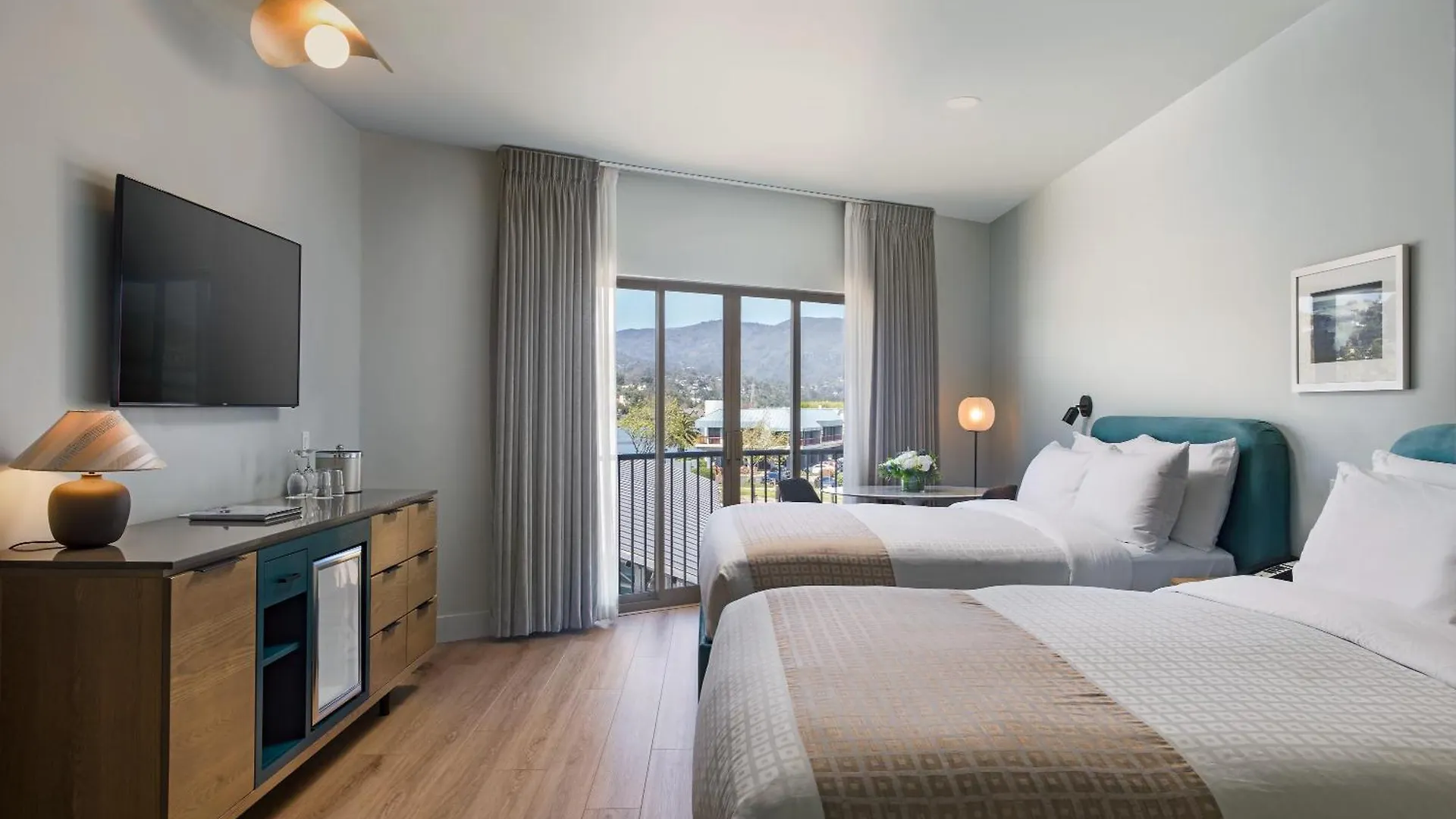
Staying near the Golden Gate Bridge puts you at the edge of one of the most architecturally dramatic settings in the United States - where the Marin Headlands meet the Pacific and San Francisco's grid gives way to coastal hills. The hotels closest to the bridge sit in distinct micro-zones: the Marina District and Lombard Street corridor on the city side, the waterfront villages of Sausalito and Mill Valley across the bay, and the downtown core reachable by transit. Each zone delivers a different rhythm, a different relationship to the landmark, and a different design sensibility. This guide breaks down which exceptional design hotels near Golden Gate Bridge fit which type of trip - and what to realistically expect from each location before you book.
What It's Like Staying Near Golden Gate Bridge
The area surrounding the Golden Gate Bridge is not a single neighborhood - it's a layered geography that spans the Marina District's Edwardian streetscapes, the boutique corridors of Sausalito's waterfront, and the redwood-framed calm of Mill Valley. Most hotels within easy reach of the bridge sit at least 5 km away, meaning the bridge is a destination from your base, not a backdrop visible from your window unless you're in a premium suite with a bay-facing orientation. Traffic on the Lombard Street and US-101 corridors peaks heavily during commute hours and weekend tourist surges, so morning access to the bridge on foot or by bike from the Marina District takes around 25 minutes and avoids the gridlock entirely.
The crowd pattern shifts dramatically by time of day - the bridge itself draws over 10 million visitors annually, with the south viewpoint at Battery Spencer becoming congested by mid-morning on weekends. Staying on the Marin side in Sausalito or Mill Valley gives you a quieter base with the bridge accessible in under 20 minutes by car, but limits your evening dining and nightlife options to small-town venues.
Pros:
- Unmatched access to coastal trails, Crissy Field, and Baker Beach directly from Marina District hotels
- Marin-side stays in Sausalito and Mill Valley offer significantly lower ambient noise and genuine scenic surroundings
- Public transit via Muni and Golden Gate Ferry connects bridge-area hotels to downtown San Francisco in under 30 minutes
Cons:
- No design hotel sits directly at the bridge - all options require a short commute by bike, car, or transit
- Weekend tourist congestion on Lombard Street and near Fisherman's Wharf significantly slows ground transport
- Marin-side hotels offer fewer walkable dining and entertainment options compared to the city-side alternatives
Why Choose Exceptional Design Hotels Near Golden Gate Bridge
Design hotels in this corridor range from Victorian-era boutique properties with individually curated rooms to Japanese-influenced urban retreats and waterfront inns that lean on natural materials and bay views to do the aesthetic work. Unlike standard chain accommodations in the area, design-forward properties here tend to invest in spatial storytelling - exposed architectural details, locally sourced artwork, or interiors that directly reference the surrounding landscape. Rates at design-positioned hotels in this zone typically run around 20% higher than comparable chain hotels, but the gap narrows significantly for Marin-side properties like those in Mill Valley and Sausalito, where boutique stays can actually undercut downtown San Francisco pricing.
Room sizes vary meaningfully by location: Marina District and Japantown properties tend toward compact urban footprints, while Mill Valley and Sausalito options offer more generous layouts with outdoor terraces or garden access. Noise is a real trade-off on Lombard Street - the corridor is a primary tourist artery, and rooms facing the street experience consistent traffic noise, particularly in summer evenings. Properties positioned one block off the main corridors or on the Marin side deliver a quieter experience without sacrificing proximity to the bridge.
Pros:
- Curated interiors that reflect San Francisco's architectural character - Victorian, Japanese-influenced, and mid-century styles are all represented
- Several properties include value-adding perks like daily breakfast buffets, evening wine receptions, and complimentary parking that reduce overall trip costs
- Design hotels in this zone tend to attract smaller, lower-volume guest counts, resulting in less lobby congestion and more personalized service
Cons:
- Compact room footprints in city-side urban properties can feel restrictive for longer stays or travelers with large luggage
- Premium design finishes don't always correlate with premium soundproofing - street-facing rooms near Lombard can be noisy
- Parking at city-side design hotels is either expensive or limited, making car-based bridge access logistically complicated
Practical Booking & Area Strategy
For city-side access to the Golden Gate Bridge, the Marina District along Lombard Street and Richardson Avenue offers the closest positioning - Crissy Field and the bridge's south tower are reachable by bicycle in under 20 minutes from this corridor, making it the most practical base for travelers who want physical access to the landmark without relying on car rentals. Japantown, roughly 4 km from the bridge, sits on Geary Boulevard near Fillmore Street and connects to the Marina by the 28 or 43 Muni lines, a transit journey of around 15 minutes. Downtown properties near California and Montgomery Streets are farther from the bridge but offer BART access and proximity to the Ferry Building, Chinatown, and Union Square within walking distance.
On the Marin side, Sausalito's Bridgeway Street is the waterfront spine where most boutique properties cluster - the Golden Gate Bridge is visible from the hillside above town and reachable by car in under 15 minutes. Mill Valley, inland along Blithedale Avenue, positions you near Muir Woods and Mount Tamalpais, with the bridge about a 20-minute drive south via US-101. Book at least 6 weeks in advance for summer stays - June through August sees the highest occupancy across all proximity zones, and design hotels with limited room counts sell out earlier than chain properties. Shoulder season visits in April-May and September-October offer the best combination of mild weather, accessible pricing, and thinner crowds at the bridge itself. The south viewpoint at Battery Spencer on the Marin Headlands is best reached by car from either side and delivers the most photographed angle of the bridge - plan for a morning arrival before 9am to avoid tour bus congestion.
Best Value Design Stays
These properties combine distinctive design character with competitive pricing, free parking, or included breakfast - reducing the total cost of a bridge-area stay without sacrificing spatial quality or location logic.
-
1. Acqua Hotel
Show on map


 Check-infrom 16:00 until 23:59Check-outuntil 11:00
Just a few rooms left at the best rate!
fromUS$ 199
-
2. Motel 6 San Francisco Ca Lombard Street
Show on map


 Check-infrom 15:00 until 23:59Check-outuntil 11:00
Just a few rooms left at the best rate!
fromUS$ 69
-
3. The Gables Inn Sausalito
Show on map


 Check-infrom 15:00 until 22:00Check-outuntil 11:00
Just a few rooms left at the best rate!
fromUS$ 370
-
4. Holiday Inn Express Hotel & Suites Fisherman'S Wharf By Ihg
Show on map


 Check-infrom 15:00 until 23:59Check-outuntil 12:00
Hurry – almost gone at this price!
fromUS$ 130
Best Premium Design Stays
These properties lead with architectural identity, curated interiors, or a landmark downtown position - and deliver a measurably elevated design experience that justifies the higher rate in the context of a Golden Gate Bridge visit.
-
5. Queen Anne
Show on map


 Check-infrom 15:00 until 23:59Check-outuntil 12:00
Hurry – almost gone at this price!
fromUS$ 161
-
6. Hotel Kabuki, Part Of Jdv By Hyatt
Show on map


 Check-infrom 16:00 until 23:59Check-outuntil 11:00
Hurry – almost gone at this price!
fromUS$ 140
-
7. Courtyard By Marriott San Francisco Downtown/Van Ness Ave
Show on map


 Check-infrom 15:00 until 23:59Check-outuntil 12:00
Rooms filling fast – secure the best rate!
fromUS$ 60
-
8. Omni San Francisco
Show on map


 Check-infrom 15:00 until 23:59Check-outuntil 12:00
Rooms filling fast – secure the best rate!
fromUS$ 157
Smart Travel & Timing Advice for Golden Gate Bridge Visits
The Golden Gate Bridge corridor runs at near-full hotel capacity from late June through August, when the marine layer lifts by midday and visibility from the Marin Headlands is at its clearest. Book design hotels in this zone at least 6 weeks in advance for any summer weekend - properties with under 50 rooms, including Acqua Hotel and The Gables Inn Sausalito, reach full occupancy weeks earlier than the larger downtown properties. September and October represent the strongest value window: fog frequency drops, temperatures are genuinely warm by San Francisco standards, and rates at Marin-side boutique properties can fall around 20% compared to August peaks.
April and May offer the most reliably green Marin Headlands for photography from Battery Spencer, but fog coverage is unpredictable and can obscure the bridge towers entirely for morning visits. Winter stays from December through February come with the lowest rates and the fewest crowds on bridge pedestrian paths, but wind chill on the span itself is significant and the Sausalito ferry schedule reduces in frequency. Two to three nights is the functional sweet spot for a bridge-focused itinerary - enough time to cover the Presidio trails, a Sausalito day trip by ferry, and a Muir Woods morning without rushing. Last-minute bookings in this category are high-risk: design hotels here don't discount aggressively, and the room count limitations mean availability disappears fast in peak windows.


